Saturday, August 11, 2012

Missouri River Rumble-Day 2

I had gotten no sleep, but we were all awakened at 5:30. A staff member would walk through the camp with a battery-powered CD player announcing the new day. The music selection was actually enjoyable in spite of the hour. My favorite was the morning they chose Indian flute music. That was the signal to break camp, get our gear to the truck, and be ready for breakfast, usually by 6 a.m. Breakfast and dinner were catered most days, and packed lunches could be ordered the night before to be delivered in the morning along with orders for bagged ice. The first shuttle to the boat ramp would leave at 6:30.

Getting boats to and from the water could be a good test of endurance most days. When we arrived at the boats, they were a good 150 yd. carry to the water’s edge. Of course you had to pair off with someone, so helping carry his or her boat down made that 600 yds round-trip, and then carrying the gear for the boat down added up to 900 yds. Before you were done, you would also generally help move two or three more boats just to get everyone to the shore. This, of course, is after the earlier 900 yds making three trips to the truck with gear. All together, you would have carried heavy gear a bit over a mile before the sun climbed above the trees, to be followed by a relaxing 16.5 mile paddle on this first day. Dang! But, don’t let a little morning exercise put you off. They say what doesn’t break you, makes you stronger. LOL!

How do you know this is the start?
Ibi is clean.

Once everyone was set to go, Rex Klein, the Rumble Chairman, would call a paddlers’ meeting to outline the day’s paddle and have the landing chairperson for the day’s destination give a report on what to expect when we arrived there. Then we’d hear Rex’s call that would become second nature by week’s end, “Okay, load’em up!” Once everyone was on the water, an airhorn would signal the start. The estimates I heard during the week were that our group included about 125 people in 95 boats. That was an impressive sight as we flailed the water and headed down river. Our first destination was at Bonnots Mill, a 2-mile paddle off the Missouri and up the Osage River, or 16.5 miles for the day.

If the group got too spread out after a few miles, Rex would stop to give the rear of the fleet a chance to catch up. It was a rest and watering break---for the leaders. Unfortunately, as soon as the sweep boat began to close, they would take off again, meaning the back of the fleet never got a break. Fortunately, once in the morning, at lunch, and usually in mid-afternoon, Rex would find a sandbar for a snack break. Everyone pulled ashore, got a chance to get out and stretch their legs, and grab a drink and granola bar. With the intense heat, several people slogged back through the mud to get in the river to cool off. There were only a few in this Rumble swim club the first day, but with the triple digit heat, the numbers increased rapidly over the course of the week.

A small portion of the fleet stretching across the river
and ready to go.

We landed and staged our boats at the Bonnots Mill access ramp, and were then shuttled 6/10 mile to a private home where we were permitted to pitch camp in the owner’s back yard. The railroad tracks went through his front yard, the train traffic was frequent and close, but his grass was green and plush. It was really a very nice setting. Oh, did I mention that the trains were frequent and close? But man, I sure would love one of those train whistles for my truck.

We had people sleeping with our boats again for security. I volunteered to go down to the ramp and relieve them while they ate dinner at the St. Louis Parish School in Bonnots Mill. By the time I got there, most of the food items were gone, but there was still plenty to eat, and best of all, the meal had been dropped from $11 to $5. There’s always a silver lining. The catering throughout the week was done by civic groups as fund raising activities, whether it was the Boy Scouts doing breakfast, or the Community Betterment Assoc., kids raising money for playground equipment, or a church ladies’ club. They got to support their communities, and we got to avoid cooking and cleaning up.

The Jefferson City capitol building from the Missouri River.

Bonnots Mill was originally a French settlement called Dauphine, and still has the Dauphine Hotel, where tradesmen would stay after arriving by river steamboat. The town was later renamed for the owner of a local mill, Felix Bonnot. The town, which is on the National Register of Historic Places, is called a French island in a sea of Germans. It remains as one of two small towns in Missouri able to preserve its French heritage.


Friday, August 10, 2012

Missouri River Rumble-Day 1A

The entryway to the Lewis and Clark Observation Tower

The steadily declining population of Hartford, IL, was only 1,423 a year ago, yet they decided three years ago to take on a $5.5 million debt for the construction of the Lewis and Clark Confluence Tower. Those of us with our bags and boats loaded before eleven a.m., had to chance to take a shuttle to the tower, which is just a short distance north of the Visitor’s Center. It is made up of twin towers, one called the Lewis tower, and the other obviously called the Clark tower. One can climb the steps in the Lewis tower, or ride the elevator in the Clark tower to stop at any of the three observation decks located at 50 feet, 100 feet, and 150 feet above the ground. Needless to say, our group went all the way to the top.

A view up the twin towers and the three observation decks.

The Dubois River is now called the Woods River. With the constant migration of the rivers, it is estimated that the site of Camp River Dubois is now in the middle of the Mississippi in the Big Bend. In the meanwhile, Woods River has migrated 2 miles north of its 1803 location, and the confluence of the Missouri has migrated 4 miles further south. The natural features now, therefore, seem more spread out than they would have been during Lewis and Clark’s stay.

The confluence of the Missouri River (entering center) and
Mississippi River (foreground) as seen from the towers.

We all pulled out for the shuttle to Jefferson City. In the early 1800‘s, Daniel Boone would blaze the Boone’s Lick Trail, which would become I-70, and his son, Daniel Morgan Boone, would lay out the capitol city near the geographic center of the state in 1821. Jefferson City has a distinction of being created specifically to serve as state’s capital.

Ibi being strapped down to the trailer provided by the builders
of Wenonah canoes and Current Designs kayaks.

We would camp at the North Jefferson City Recreation Area, which was at the intersection of the final approach to the local airport and two primary highways through the capitol. I was surprised when we arrived to see neither water nor our boats, but they had been staged at the Noren Access Ramp about a mile away, and staff were camping near them for security. We only had a couple planes come in, but by evening I was convinced that one out of every five residents of Jefferson City owned a large motorcycle with loud pipes. The noise was constant. It was as if motorcycles were staged at either end of town. As soon as one made the run by the camping area, the next would be dispatched in the opposite direction. Later a motorcycle rode into the overflow parking area near our tents and fired off a gunshot. I heard the bullet strike some unknown object, and then the cycle roared back out. I could not believe I hadn’t brought earplugs. That was a lesson I should have learned on the Keys Challenge. By morning I would have gladly paid $5 for those little penny foam plugs.

Home Sweet Home.  The North Face Rock 22 tent with the Jefferson City
capitol dome visible between the tent and the telephone pole. 
Click any picture to enlarge.


Thursday, August 9, 2012

Missouri River Rumble-Day 1

I was going to do a post on ‘the typical day’, but you’ll see that develop as we go along. I drove up to Alton, IL, taking twelve hours, and arrived at the Super 8 Motel in Alton in the late afternoon. This was one of three motels that the River Rumble staff had blocks of rooms reserved in. The first sign of the coming week to welcome me was a parking lot peppered with vehicles carrying kayaks and canoes. Saturday was going to be a full day with an early start, so no time was wasted after checking in. I went to the Burger King a couple doors down from the motel, grabbed a bite to eat, then took a shower, made a call home, and hit the sack.

The only deadline Saturday required that we be at the Lewis and Clark Visitors’ Center, have our duffels loaded on the truck, and our boats on the trailer in time for a punctual noon departure, or we’d look silly standing in the empty parking lot all alone. There was enough to get done before that noon departure that I was up at six. To make a quick turn-around, I hadn’t taken much in the motel, so with a quick breakfast, I threw my knapsack in the back of the truck, and headed down Rt. 3 for the Lewis and Clark Center about eight miles away.

Recreated Camp River Dubois

Meriwether Lewis and William Clark had made their way to the confluence of the Missouri River and Mississippi River for the start of their three-year expedition. They were planning to camp near the confluence on the west side of the Mississippi during the winter of 1803-04 to complete their preparations for a spring start up the Missouri. The Spanish Commandant at St. Louis, however, had not received formal notification from his government of the Louisiana Purchase, and would not permit the expedition to cross the Mississippi. So in mid-December, 1803, Camp River Dubois was established on the east side of the Mississippi near the mouth of the Woods River, north of the Missouri

This was really a military expedition, but the Corps of Discovery of 25 men was comprised of only 14 soldiers. The rest were made up mostly of a hunter-interpreter, Kentucky woodsmen, and a couple French watermen. These were strong individualists that didn’t understand or readily accept discipline, military or otherwise. While Lewis was in St. Louis gathering supplies, supporters, and information from traders and trappers that had been on the river, Clark tried to teach military discipline, marksmanship, and mold all the individuals into a cohesive unit. During the winter, several had to be reprimanded and one court-martialed for refusing to perform sentry duty, disobeying orders from their officers, fighting, and making off for neighboring whiskey shops.

By spring, additional recruits had been added to swell the unit to 45 members. Three boats were readied with provisions, ammunition, and supplied for the trip to the Pacific and back, and on May 14, 1804, the expedition made a late start at four in the afternoon to cross the Mississippi and accomplish a start up the Missouri.


The separate cabin was built outside the stockade for Mrs. Cane, who was hired to do the laundry and sewing for the corps during their winter encampment.


Wednesday, August 8, 2012

Missouri River Overview-2

The Mississippi Big Bend, just north of the confluence of the Missouri.

Everything is a compromise. Anyone that has spent any time around the water and boats will tell you the same thing. There is no such thing as a win-win. As great as the Great River Rumble and the Florida Keys Challenges, and other such events are for all the reasons mentioned yesterday, there has to be some payback. No matter how much effort the organizers put into insuring safety, there is always the liability waiver that has to be signed, which is just a way of saying you have to assume some responsibility for yourself; you have to be self-sufficient. So what are the unexpected things that you should expect?

1. You have to expect a wide range of weather conditions. The organizers can give some broad guidance on what you might expect, but hey, the weather is the weather. In this case we were expecting a strong heat dome and high temperatures. We had a couple 100-103 days, and one afternoon when we landed, the temperature was 105.2. That’s still better than the 115 I would have had to endure if I had remained at home. Being 69 years of age, I know our bodies’ abilities to cope with excessive heat diminishes as we age. I’ve never done well in high temperatures, so I was concerned about the combination of high exertion and high temperatures, but we all managed with some thought. We were cautioned that we would be sweating large amounts, and that we should have plenty of water, salt or electrolyte additives, at least a gallon of water, wicking clothing, sunscreen, sunglasses, and wide-brimmed hat that could be frequently soaked. I went through 6 qts of water on couple days, or a bit better than a quart an hour. Many paddlers carried large water guns to soak each other, and when we took rest breaks, a lot of people sat or laid in the river to cool their core temperature. In the end, we managed to get through, and I even came home more confident about paddling in such conditions. Now, instead of sitting home because it’s too hot, I know I can safely get on the water and manage the conditions.

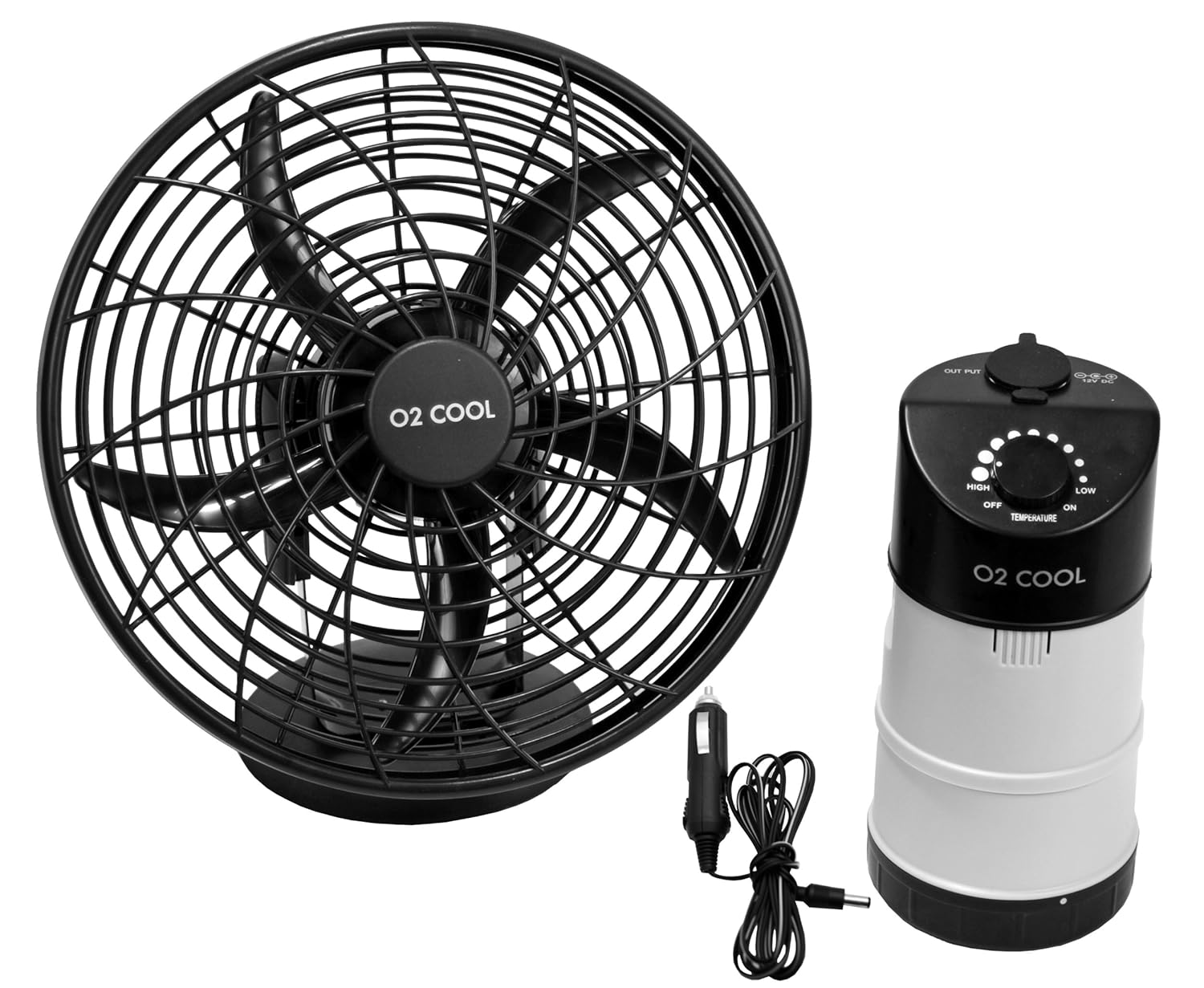
2. One problem with mid-summer events is trying to sleep in a tent in high heat and humidity. We were encouraged to bring a battery-powered fan, and most did. I posted about the new O2 Cool fan I purchased, and it was fantastic---for the first two days before it failed. While it didn’t help me on the rest of the trip, Gander Mountain seems to be standing a hundred percent behind the fan and are already sending me a replacement and a FedEx return authorization.

3. When dealing with large crowds of people, you will encounter all types of personalities. The great thing about paddlers is that they are ALMOST always supportive and friendly. They lend a hand wherever possible. Most are patient, even deferential, in waiting their turn at the ramp or standing in line for the shuttle. So, don’t get angry and carried away when you find the rare few that are hard chargers who believe that God created heaven and earth just for their benefit. It’s better to yield than allow them to damage your boat. It’s just a fact that people’s personalities don’t change when they get on the water. If they are aggressive drivers on the interstate, they will also be aggressive paddlers on the river.

4. You can safely assume that most people on the water don’t know the rules of the road. Yes, I know paddlers are an independent lot, some even independent to the point of anarchy, but there are rules in everything, whether baseball, football, or paddling. And they are there for a reason. Rules are the natural consequence of injury and death. I was in a meeting situation with one paddler, and I told him to go ahead, and that he had the right of way. He responded, “Oh, I don’t mess with those rules.” As a retired commercial mariner, I will state flatly that if you don’t know the rules of the road, you have no business on the water. I don’t care if your vessel if 2500 tons or 25 pounds, the rules are there for everyone’s mutual safety. If you don’t know the rules or choose to ignore them, you are a hazard to everyone else on the water---period.

5. Be prepared to embrace, or at least endure, the circumstances you meet. Conditions may not be what were on the trip’s promotional brochure. We experienced two of those situations. One, the river was at an all time low. At least according to one man, who had lived his entire life on the river, and who said he could not remember it being so low. The USGS gauge put the river at 2.3 feet. That’s an absurd change from last year when the trip had to be cancelled due to flooding. The low water levels put us in the river bottom, or in places like to Auxvasse River where the bottom appeared to have no bottom. We encountered frequent shoe and leg sucking-mud. No matter how much we tried to flush our feet clean when getting in the boats, most boats had enough nutrient-rich muck in their bottoms to sprout vegetables. The second situation occurred in the confluence of the Missouri and Mississippi Rivers. The organizers had done a trial run of the trip and found the meeting of the rivers to be as smooth as glass. We even looked at the confluence of the rivers from the top of the Lewis and Clark observation tower---smooth as glass. Instead, the Mississippi seemed to say to us, “Your trip on my waters is a short one, so here, I’ll make it memorable.” More on that later.

So, anyhow, nothing here should discourage you from joining such a trip. If you are thrown a curve, it just makes the stories about the trip more interesting,


Tuesday, August 7, 2012

Missouri River Overview

Home from the banks of the Missouri.

Ibi’s back home. The trip to the Great River Rumble on the Missouri River took her 576.8 miles by road to the event, 159.7 miles by water from Jefferson City to the confluence with the Mississippi at Hartford, IL, and 1188.6 round trip including everything door-to-door.

I am now something I hadn’t been in a week---DRY! Between cooling in the river, sweating a gallon a day, literally, Rumble showers (I’ll explain.), and more sweating, I was wet continually. That sounds uncomfortable, and it was, so the question should obviously arise as to whether I’d recommend such an event. Absolutely! If you’ve never done such an organized paddling event, there are a lot of reasons for signing on. To be balanced, there are a few negatives, and I’ll go over those, but let’s concentrate first on why you should join the next Great River Rumble, or such a similar event. Before starting, a thank you to Jean for updating the blog for you while I was on the river.

1. If you enjoy sharing a great experience with people who share your passion for paddling, you will find yourself surrounded by dedicated and enthusiastic folks. The events take a tremendous amount of planning and organization, and the work is done entirely by volunteers. Even the group’s chairman is unpaid. They dedicate their evenings, weekends, and vacations for much of a year to put on each function just so they can join in as an equal with everyone else.

2. You will share the water with people of all skill levels. Some are experts in their field, and will share what they’ve learned with evening tutoring sessions, and if you’ve expressed an interest and desire to learn, will paddle alongside frequently during the day to refine your stroke.

3. If you feel uncertain of your skills, but would like to sharpen your abilities while staying safe, there is no better setting. You are never out of sight of others that are able to come to your aid. People come with all skill levels, and if you roll, you certainly won’t be either the first or last. There was only one day during the week without a capsize, and as many as one to three on the other days. There is a pace boat, a sweep boat to make sure no one falls behind or gets separated from the group, and three rescue/assist powerboats. If you capsize, everyone around you blows their whistle to attract the attention of the rescue boat. They will pull you from the water first, round up your floating gear, pump your boat dry, and then either tow the boat astern while you ride in the powerboat for awhile, or help you get right back in your boat. While one paddler did slip on a ramp and injure her wrist, there was not a single boat-related injury that I heard of.

4. There are skills related to technique, and there are also skills needed for different types of water. I would love to paddle the full lengths of both the Missouri and Mississippi, but have never paddled on either. This was a great opportunity to get firsthand experience in a safe and controlled setting. If you need to learn about wing dams and their hazards, boils, whirlpools, eddies, ferrying, hazards of operating around fixed objects like buoys, bridge piers, or moored barges, picking the side of a river that provides the most favorable current or best landing locations, or what to expect when meeting large commercial traffic, you can experience all of these without betting your life on what you don’t know. With a better understanding of what is happening on the river, you can return to the river on your own with greater confidence.

5. One of the best reasons for such outings is the chance to meet new people and make friendships that may last your lifetime.

Tomorrow, I’ll go over some of the negative aspects you should be aware of. Sorry, but there is nothing shocking here, no exposes, but some realities of such events you should know to join in with your eyes open.


Saturday, August 4, 2012

Crossed "Old Man River"

As of 2:31, Jim had completed the Rumble on the River paddle.  His SPOT checked in from the landing at the Lewis and Clark State Memorial Park in Illinois.  Yahoo!   A good job well done!  A good friend here in Fairview said she couldn't believe anyone would voluntarily subject themselves to such an endeavor.  Anyone knowing Jim well knows how much he loves being on the water, but even this trip must have been a bit much for him - what with the heat, distances, noisy nights and the strain of a single paddler trying to keep up with tandem canoes being pushed by multiple paddlers.  We'll see how he feels tomorrow!  CONGRATULATIONS to the entire Rumble on the River group, especially to Jim from me!  We've paddled and sailed a lot of miles together and I'm glad he has the gumption and opportunity to continue enjoying what he loves best - being on the water!

Last Day of the "Rumble"

Florissant: old farm house in the summer timeFlorissant, MO
The "Rumble" group is passing Florissant as I am writing this.  They have a 29-mile leg today, which will finish up at the Lewis and Clark State Memorial Park in Illinois sometime this afternoon.  At that time they'll begin loading gear and boats in and on their own vehicles for transport home.  The evening will be capped off with a celebratory group dinner, followed by a night's rest for Jim in an air-conditioned hotel room.  Florissant is a fairly large city of some 55,000+ inhabitants, an outer-ring bedroom community for St. Louis.  The river our group is on today takes many twists and turns, ending up at the Mississippi River.  The group will actually have to cross the "Big M" today, to reach their final destination in Illinois.  I sure hope the temperatures they'll be experiencing are a bit lower than they are here in northwestern OK.  It reached 111 degrees on our patio yesterday, in the shade of a large pecan tree.  We have four exotic pet birds caged in the shade of that tree also, and maintain a misting system to help keep them cool.  Many wild birds have decided it's a nice place in which to rest during the heat of the day. There is also a large birdbath in the yard, and a shallow pan of water on the ground for the small four-legged creatures who wander in.   We are currently playing host to 5 Mississpii Hawks, numerous Blackbirds, a pair of Orioles, a family of Blue Jays and lots of Doves, several squirrels and a couple of rabbits.  The small birds have all disappeared - hopefully they haven't expired from the heat and lack of water.  I don't think the presence of the larger birds has chased them away - those seem to have established a truce amongst themselves and wander freely about without fear of each other.  They just sit with their wings ajar, dispersing body heat.  A couple of conservation groups nearer to Oklahoma City are being kept busy, providing shelter and care for animals and birds that are suffering effects from the heat there and also from devastating wildfires that are rampaging in that area.  Our local hard-working firemen are being called out frequently to put out brush fires in this area.  With winds expected to be about 25 MPH today, they are going to have their work cut out for them!  Back to our paddlers---  The group will be passing the St. Stanislaus Conservation area during the course of this last leg of their "Rumble on the River" trip.  Included in that conservation area are several memorable sites of interest.  Charbonier Bluff, a full 25-feet higher than the Gateway Arch in St. Louis, evidence of two Native American villages, several Indian burial mounds, and the ruins of several sturctures, including a chapel built by students from St. Stanislaus Seminary in 1837.  Our paddlers will not have time to explore those sites today, but might be able to see the large coal hill known as Charbonier Bluff.  That large hill has been placed on the National Rigister of Historic Places, and has served as a landmark along the lower Missouri River for more than 1,000 years.  Our group will probably pass through the "Car of Commerce Chute" today, on their way to the Mississippi, noted as an important route of water-borne commerce for hundreds of years.  There is so much of historical interest in this area that it would be well worth revisiting- in cooler weather that is!  Happy day, group; keep well and paddle safely!

Thursday, August 2, 2012

Short Day

Jim and the Rumble on the River group had a short day today - only twelve miles on the river and then on to a state park.  When they arrived at their take-out point on the river, shuttles were ready to take them an additional two miles to a state park where they have a quiet space for the night.  The entire state park was made available to the group, so they're not camping tent-flap to tent-flap.  Jim said it was refreshing to be on top of a breezy hill.  He immediately got some much-needed shut-eye after setting up his tent and dedicated the rest of the day to resting.  Some of the group opted to go to a local winery on a free shuttle for a tour.  Some, like Jim, decided a day of rest would be better. The catered dinner for the group tonight was, as Jim described it, a veritable feast. He particularly enjoyed the fresh salad, ice-cold lemonade and/or tea, Salisbury Steak (yes - he ate the steak!), mashed potatoes, and various desserts.   The group's next two days will be longer, covering 28 and 29 miles on the river respectively.  Then, they'll enjoy a dinner together celebrating their achievements, sleep in air-conditioned hotel rooms and be shuttled back to their vehicles for return to their respective homes.  At that point Jim will have a 550-mile ride back home, where his two grand-daughters are excitedly waiting for him to take them camping and canoeing! The older girl spent a week at a church camp last month where she got a taste for canoeing. The younger one is anxious to learn.  We'll have to find someplace safe to take the girls for water fun.  A young boy died here in Oklahoma yesterday, from an amoeba infection, after swimming in a lake in the southern part of the state last week-end.  We heard of several of those fatal brain infections happening to people who had been swimming in Florida ponds and canals when we lived down there.  This is the first time I remember hearing of one here in Oklahoma.  What is most bothersome here are blue and green algae blooms on the local lakes in the hot weather.  A state-wide warning has been issued - "If it's green on top, STOP," meaning don't go in the water.  All you river travelers, take care!  We'll be keeping in touch with Jim via the SPOT during the day and on the phone during the evening hours.  Try to keep cool - and Happy Paddling!

Wednesday, August 1, 2012

"Synchronized Swimming"

Well, the group made Washington, MO at 4PM today after a 33-mile endurance trial in the heat.  Jim said he was able to get out of the canoe for a bit to stretch his legs during the day, a welcome relief!  It finally cooled off enough last night for the group to get some respite from the heat, but train traffic was non-stop, so sleeping was difficult.  Tonight should be a little "better" - they are camped 150 feet from the tracks instead of 5 or 10 yards.  After years spent aboard vessels at sea, Jim is used to the motion of  boats while trying sleep, but he says having your sleeping bag shaken by trains rumbling by is another matter altogether, to say nothing of the noise.  On the first day of this venture, several paddlers jumped in the river to cool off during their lunch break.  The muddy water put almost everyone else off.  On the second day, the swimming group got a bit bigger.  Today, Jim said about 80% of the group joined in - wading out to where they were about shoulder deep, bobbing about as a group.  Jim described them as looking like a disheveled synchronized swim team, with sunglasses and hats of various descriptions just barely visible above the surface.  He was one of the swimmers today, trying to escape the heat.  One of the boats entered in the 340-mile, non-stop endurance race stopped at the check-in point in Washington while Jim and I were talking on the phone.  The racers in that boat had to be helped out of the boat.  Their couldn't uncurl their fingers from the shape of the paddle handles, and their knees buckled when they finally did get out of their boat.  Jim said the 340-mile group has experienced a high attrition rate because of the heat and non-stop exertion.  All the members of the group Jim is with are still gamely paddling on, but today he really began to feel the effects of the heat and trying to keep up with the group.  The event organizers had arranged for Jim's group to get showers at the YMCA in Washington, which Jim says is really a luxurious facility.  The shower was most welcome!  Tomorrow, -YIPPEE - they get to sleep in - until 6AM! as their days' run is only twelve miles.  The following two days will be runs of 28 and 29 miles.  I think all participants in the event can probably truly appreciate what early explorers and settlers must have experienced.  God bless them all!
Adjacent to the Katy Trail

The Rumble on the River group has been paddling adjacent to the Katy Trail State Park today.  Portions of the Katy Trail are easily visible on the satellite pictures when you view the Spot Check site following Jim's progress.  It isn't visible to the paddlers though because the water level in the river is so low that all they can see are the deadfalls and mudbanks.  Too bad!  The Katy Trail is the nation's longest rails-to-trails project.  It was built on the former corridor of the Missouri-Kansas-Texas Railroad, better known as the Katy.  The trail provides a long-distance hiking and bicycling path of almost 200-mile length, going through some of Missouri's most scenic areas.  The group Jim's with just missed a "Berries and BBQ Wine Trail" bash, held last week-end.  They'll be spending tonight in a river-side park in  Hermann, which styles itself as a German-like burg with lots of wineries in the area.  With Jim's luck  the group will end up with schnitzel for dinner tonight  :>( , another "piggy" meal.  Hopefully there'll be lots of cold brewskies of one sort or another for this group of hard-working paddlers!......Hours later..... Jim called home soon after arriving safely at Hermann.  He said the town lives up to its' reputation with lots of friendly people, and lots to do and see.  No "piggy" meal for him tonight either.  The entire group was on their own for dinner on this one night and Jim found a deli offering a full menu from which to choose.  He also greatly appreciated lots of  his favorite drink - ice-cold root beer.  The group isn't camping under the airport approaches this evening, but are just about 10 yards from busy railroad tracks.  Our afternoon phone conversation was cut short by the noise of a train carrying coal.  When Jim finally got to call back he said most of the group he's paddling with are in canoes, unlike the Florida Keys Challenge that he participated in, where most were paddling kayaks.   Most of the canoes on this trip are tandem canoes, being manned by more than one paddler and Jim has to work hard to keep up with the group.  ...Again, later..... He just called to say "good" night.  Since we last talked about 16 more trains have gone by and then- GEEEZE - his fan quit. My heart goes out to him in this heat!!!

Tuesday, July 31, 2012

30 July - Finally, some sleep.  Jim was finally able to get some much-needed rest.  He only heard trains twice during the night, even though camped within yards of the gated rail crossing.  It had been a long day, after no sleep the night before - thanks to noisy motorcycles being ridden non-stop through the group's campsite.  That lack of sleep was common to the entire group.  Three more capsizes were experienced by group members during this day, one near a wing dam with two-foot swirling waves and two when tired paddlers attempted to get back into their canoes after a lunch break.  That break had been taken at a point on the aptly named Muddy River.  Jim got partway out of Ibi and immediately sank thigh-deep in sucking mud.  Then he was caught with one foot mired below and one foot still in the canoe.  YIKES!  We've all probably seen pictures of someone doing the split, caught between a pier and a vessel rapidly leaving that same pier.  That is the situation in which Jim found himself.  It took some effort for him to finally get back into Ibi and get the mud washed off.  Thank goodness for Ibi's stability!  Two other unlucky paddlers in the group capsized while attempting to relaunch their canoes off slippery mud banks.   When the group reached Chamois they found themselves at a very small boat ramp and only one canoe at a time could be taken out.  That meant the entire group had to wait for quite a while to finally have a chance to stretch their legs and then carry their boats and gear up the hill.  When Jim got his turn he found his legs didn't want to work too well - he was suffering cramps from being in the boat so long.  Then, to add insult to injury, he learned that dinner was kielbasa, after having pulled pork sandwiches the night before.  For most people that wouldn't pose any problem at all.  However, Jim chose years ago not to eat any pork or beef, and sticks to poultry, fish, and protein-rich meat substitutes.  On these two nights, though, he forgot dietary preferences and wolfed down the pig-origin meals with gusto.  After all, a mans' got to do what a mans' got to do, right???  The group will have a longer paddle on Monday, in what is predicted to be record-breaking heat, stopping at the little town of Hermann.  Let's hope they don't camp near the airport approaches. 

Sunday, July 29, 2012

Jim's initial Spot Check came in at 8:23 AM as he started the first leg of the Great River Rumble after a sleepless night.  He tried hard to be well prepared for this trip, recognizing that the heat was going to be a big factor.  What he didn't figure on, and couldn't have known about, was that the first nights' camp-site, decided upon by the organizers, was directly under the flight-approach path to the airport serving the capital.  As if that wasn't bad enough, Jim said that apparently everyone and his grandpa in Jefferson City must ride motorcycles - AT MIDNIGHT!  Noisy cycles came through the campsite one after the other all night long.  At one point, Jim heard a gun-shot, with a ricochet hitting something, but the motorcycle noises continued, non-stop.  On a positive note, Jim's new fan worked well, and he only had to use it for a couple of hours before thunder storms lowered the temp. Even then, the cycles came!   There was a 3.5 knot current running today in the low-level river, and even with a day-long headwind, Jim made the days' destination, near Bonnets Mill at 2:26.  The group stopped at noon for about a half-hour lunch break.  Some of the paddlers debarked to stretch their legs, but quickly ended up knee-deep in oily mud.  Jim opted to stay in Ibi.  Earlier in the day he had a chance to observe the "safety net" put in place by the trip organizers.  Two canoeists capsized and were quickly picked up the safety crew accompanying the group in a power boat after Jim alerted them to the situation.  At days' end, after arranging his camp site, Jim volunteered to stay with the boats while everyone else went to dinner.  I hope there was enough food left for him later!  Our conversation on the phone was constantly interrupted by his yawns as he awaited their return, and he was really looking forward to putting his head down for some well-deserved (and needed!) rest.  Don't know how that will work out.  Tonight's camp-site is on the front lawn of a private residence - immediately adjacent to a busy railroad crossing complete with a working (and noisy) crossing-gate. Oh, for a pair of earplugs.   Our group will meet another paddling group sometime this week.  The other group is taking part in a 340-mile, non-stop race.  Many in that group are members of the intrepid "Water Tribe," individuals noted for their participation in endurance events such as the "Round Florida Non-Stop" race.   I guess some people are just gluttons for punishment.  For now, I'm just praying for a peaceful night for Jim and his group and a good day tomorrow. 

Saturday, July 28, 2012

Jim called to let me know he had gotten to Jefferson City on the shuttle.  He's a bit concerned about Ibi, though.  When it was loaded onto the transit trailer this morning, it was loaded upside down, resting on the fore and aft decks instead of on the heavy-duty coaming.  He said when Ibi was strapped down her decks compressed quite a bit.  He's hoping the kevlar popped out and regained it's proper shape when she was unloaded.  The group is camping quite a distance from the landing where the boats are spending the night, and he hasn't seen Ibi since she was taken off the trailer.  Several of the support team is staying at the landing overnight to guard all the boats.  Wake-up time for the group is to be at 5:30 AM every day so they can get an early start, hopefully ahead of the worst of the daytime heat.  They are camping on the north side of the river tonight, in sight of the Capitol dome.  The high temp. at Jefferson City was forecast to be 97 today.  It was 103 here in Fairview at 3 PM.  The state of Missouri, like most of the mid-west is experiencing drought conditions.  One of the group with Jim is from that area and he said he's never seen the river so low.  A State of Emergency was declared in Missouri on July 23 due to the drought.  Water well drillers there are reportedly taking advantage of landowners hard-hit by lack of water, charging excessively high prices to drive new wells.  The low water level in the river will possibly make night-time exits kind of difficult - forcing the group to drag the canoes and kayaks up steep banks.  Will know more about that tomorrow.  Keep up with Jim by following his Spot Check on the right-hand side of the blog.  Try to keep cool and bug-free!

Friday, July 27, 2012

Jim just called from near St. Louis.  He left Fairview early this morning and drove East all day in order to be on time tomorrow for the start of the 144-mile "River Rumble."  He'll be paddling in company with about 150 other canoeists wacky enough to brave the expected record high temps.  Jim says his hat will probably spend half the time being dipped in the river to keep his head cool.  He'll be carrying enough water and Gater-Aid to stay hydrated, and granola bars, nuts and peanut butter sandwiches made up in tortillas for lunch and snacks during each day.  Being on the water brings him a lot of pleasure and joy.  Sure hope the weather isn't too hard on the group!  Will keep up the blog for him from home, with daily news and observations from his river jaunt.  Go safely, Jim and little Ibi.  My thoughts and prayers are with you and your paddling companions. 

Thursday, July 26, 2012

Ready to Head Out

All the gear has been checked over one last time.  The canoe is on the truck, and the tank full of gas.  About 6 a.m., I'll head up to St. Louis, and then across the river to Alton, IL, for the night at a Super 8 motel.  Saturday morning we all meet at the Lewis and Clark Visitor Center, and park our vehicles there so they are waiting for us when we return.  The boats are loaded on a shuttle trailer, we and our gear are loaded onto buses, and we head for Jefferson City, MO.  Our first night's camp will be there, and Sunday morning we hit the river for the 144-mile paddle back to the confluence of the Missouri and Mississippi Rivers.

Again, you can follow along by clicking Ibi's SPOT in the right margin, and change the view to satellite to share what we're seeing on and along the river.  Watch out especially for the wing dams, which deflect water to accelerate the flow of the river and deepen the channel.  Some are just visible at the water surface, others are hidden below the surface, but if you zoom in, you'll see the swirling current.
   

In The Nick of Time

The O2 Model 1092 Portable Tent Fan

My hopes were realized.  USPS and FedEx indeed were delivering much faster than they were updating the tracking information.  Both the sail and fan are in hand.  I'm impressed with the fan so far, and while it has just come out of the box and I can't comment on durability, I found a number of attractive features that weren't even mentioned in the information on site.  Advertised as a tent fan, it would also be nice in an RV, on the porch, or even a picnic table.  While I couldn't even feel the air from the Coleman tent fan, this one puts out a very nice flow of air even on the low setting.

It has a stable base, a stand that adjusts in height, and rotates for the desired angle of elevation.  The magnets are very strong that hold the fan to the base.  This arrangement is chosen so the base can be removed and put outside the tent and the fan then secured back to it so the fan is suspended from the top or side of the tent.  Another thing I really like is that the battery pack has a thermostat.  You turn the control knob clockwise until you reach the setting you want, and if the air temperature drops during the night, the fan cuts off to save battery life.  The only down side is the battery demand, but if you want more air and more power, it's reasonable that you'll have to pay for it.  The pack takes eight D cell batteries, which run $12.88 at our local store, so the power-saving thermostate is doubly appreciated.  They advertise a battery life of 72-hours, so I'm only taking one set of replacement batteries to get me through the week.  If it is used in a vehicle, it just runs directly off the cigarette lighter plug. 

In spite of the 105-107 degree temperatures NOAA is forecasting so far for this trip, I trust this fan should give me some sleep at night.

Wednesday, July 25, 2012

It's Not Looking Good.....

If you're wondering what I'm talking about, just pick a subject.  The fan, in four days, has made it from Martinsburg, WV, to Atlanta, GA.  The sail went from San Francisco to Clearlake Oaks, CA, and then back to San Francisco.  They say the tracing information may take 48 hours to update, so I hope their updating is more in error than their shipping.  The projected delivery date is the day after I leave. 


Things have been going less than great for this young dove also.  We've been having a few days of high winds, and the bird was blown from a nest high in a pecan tree.  It found its way onto the patio and climbed onto my chair.  Its crop was full, and the parent birds were hanging close, so with the difficulty in trying to feed a young dove, we decided the best course was to leave it be and have its parents look after it.  Two days later it had begun to fly, and Jean saw it flitting about the back yard.


I wrote previously on Fort Supply.  The Ft. Supply to El Reno military and freight road was laid down in 1869 as part of the military supply line connecting three states.  The trail crosses present-day Rt. 50 just south of Mooreland, OK.  It was common for new roads to closely follow the original trails, so just a bit further south, you can see where the trail crossed the North Canadian River right alongside the existing highway bridge.  You can see several of the pilings from the original bridge that would have borne mule wagons and stagecoaches across the plain.  There are three near the left bank, four visible on the island, and those near the right bank are buried in foliage.

As for the weather during the upcoming Missouri River trip, the heat is supposed to increase a degree every day, to reach 109 by Tuesday.  Come on fan!


Sunday, July 22, 2012

Missouri Preparation: Sail

Credit: WindPaddle.com/gallery

The fan was a fairly quick decision based on an immediate need. Whether to invest in a sail or not, and which one, is something I’ve been wrestling with for two years. We’ve spent our adult lives sailing, and as I’ve always said, and believe, the only thing better than sailing is breathing. I have no delusions that a canoe/kayak sail will replace what we lost in giving up real sailing, but the addition of a sail to a paddle boat still makes a lot of sense.

Sails are expensive, even for our little 25-ft Dufour, “Thistle,” but the payback with a real sailboat is that they can be used any time there’s a zephyr, no matter what direction it’s from. The negative aspect of getting a return on such an investment as a downwind sail on a canoe is you only get to use it when the wind is astern. When I paddled 250 miles on the Gulf Coast with the wind always on the nose, the sail would have been useless, and the investment in the sail and the hassle of carrying another piece of gear would have been just as depressing as the constant fight upwind. In the Florida Keys Challenge, however, with the wind mostly on the quarter and astern, the sail would have been a blast. There were indeed a couple members of that group who experimented with sails. The advantages are that a sail can add speed, allows time for muscles to rest and thus may extend the possible miles made good in a day, allows you to keep moving while eating lunch or checking the map, serves as auxiliary propulsion to boost paddling efficiency, and if the sailing gets exciting enough, it adds a whole new way to enjoy the outing.

I also wrestled with which sail would suit me best. I looked at the Pacific Action Sail, a couple different versions of Balogh Sails, the Flat Earth Sail, and the WindPaddle Sail. I tried to tap into the experiences of those who have used the different sails with strangely no feedback, so have had to rely on my forty-some years of sailing experience and reviews on sites like Paddling.net and TopKayaker.net. With all things in boating, there is never an absolute win. Everything is a compromise. For everything you gain, there is something that must be sacrificed. The question is what gains benefit you most and are best suited to your style of paddling while feeling the least hurt by what you have to give up.

For example, if sailing efficiency is what you seek, there are those who will go to any length to sail their kayak upwind. David Valverde, of Balogh Sail Designs, and the members of WaterTribe are probably the most experienced in getting speed and windward performance out of paddle boats that can skip across the wave tops in open water at high speed. To accomplish this efficiency, you have to add an aluminum mast, aluminum crossbeam for the outriggers, two inflatable floats, a centerboard, hull mounts that are bolted to the boat to hold the outriggers and centerboard, and a full-battened sail. That’s a lot of gear to jam in a kayak or canoe. Plus, it makes the boat useless if you like to explore narrow, twisting streams with overhanging trees, and some deadfall or sweepers you need to navigate. So, it’s a matter of fitting the gear to the style of boating you wish to do.

I was looking to go the other way. I wanted a sail that requires the least amount of supporting gear, the least impact on the boat, in other words no drilling of holes for screws and bolts, reasonably priced, is light, and takes up the least amount of room. For the sake of safety, I sought low center of effect (the least likely to upset the boat) and the ability to quickly douse and stow the sail in a sudden, strong gust or squall. Besides safety, I also wanted to be able to quickly shift from sailing for miles to gunkholing (exploring small, shallow streams and coves) if I spot something interesting or some wildlife to photograph. To get these advantages, I was willing to resort to a sail that came into its own only when running or broad reaching. This all brought me to the WindPaddle

The WindPaddle comes in three sizes: Scout, Adventure, and Cruiser. The Scout is an entry-level sail or one for small playboats. The Adventure is the most popular, and is a mid-sized sail. The Cruiser is an expedition sail for larger, heavier boats that are carrying more weight in gear and supplies. They are rated to fly in up to 40 mph winds, not that I plan to try that any time soon, are set right on the deck for lowest possible center of effect, are self-deploying, can immediately be released to spill the wind, and can be furled and stowed in just a few seconds. The reviews I read on the sails consistently gave it a 9 on a ten scale, and it has been used by paddlers from around the world, from the Sea of Japan, England, the Sea of Cortez, Holland, the Canary Islands, an ocean expedition off of Norway, and more. So, I decided on the 54-inch Cruiser, in yellow to match Ibi, and now it’s a race to see if it gets here before I leave for the Missouri River.

Saturday, July 21, 2012

Missouri Preparations: Fan

I dislike spending more money, and I dislike having to carry more gear, but I’m faced with a couple situations I may need to be prepared for. The first is the heat. The heat dome is hitting most of the middle of the country. The Missouri Paddlers reported temperatures of 103 near the headwaters of the Missouri River. Here, we’ve been seeing 104-109. I look with envy at Josh Tart paddling in Upstate New York with temperatures much of the day in the 70’s, a short high of 85, and then falling off fairly quickly to nightly lows in the mid-60’s. That’s comfortable paddling and sleeping. By contrast, here we’ve been seeing temperatures still in the 90’s by 8 p.m. That pretty much guarantees an unbearable and sleepless night if there isn’t some way to cool down. A shower or dip in the river just before climbing into the tent is an obvious necessity, but just as essential is having some moving air in the tent.
Credit: Gander Mountain

Unfortunately, the lower Missouri weather is much like here in Oklahoma. I’m hoping the temperatures will fall below the hundred degree mark, but I need to be prepared in case they don’t. We went to Bass Pro, our only area outfitter, to look at battery-powered fans. They had a Coleman fan on display, and I can only say I was tremendously under impressed. Holding my hand or face inches from the blades of the fan gave me nothing---not a breeze, not a zephyr. We left without solving our problem.

Jean looked on the web and found a fan at Gander Mountain called the 02 Cool Model 1092 tent fan for $30. The reviews are 4.5 out of 5, with only one negative review. That means ordering a fan without a chance to try it out, but if I get some sleep at night, that will be $30 well spent. So, its on its way from Gander Mountain.


Thursday, July 19, 2012

Sacajawea

I’d love to paddle the Missouri, and in just a week and a half will make the Great River Rumble, which is an event that paddles 144 miles of it. That makes hardly a decimal point in the 2,341 total miles that the river travels, but it will get me back on the water, and wet Ibi’s hull in both the Missouri and a few miles of the Mississippi. Of course, you can’t say Missouri River without your thoughts turning to the Lewis and Clark Expedition. Then, any discussion of Lewis and Clark leads logically to Sacajawea (or Sacagawea), who contributed significantly to their success.


Sacajawea
Sculpture by Leonard McMurry

Sacajawea was of the Shoshoni tribe, from near the headwaters of the Missouri River, in the mountains of Western Montana. (The Comanche tribe was a later offshoot of the Shoshoni.) She was born in 1788 in Idaho, and those of us who follow our joint interests in paddling have to love her name, which means “canoe launcher.” The Hidatsa tribe, that kidnapped her when she was twelve, called her “bird woman.” I’ll refer you to a piece I did on Sacajawea on a 16 April 2011 post rather than repeat the same information. It’s worth jumping back to that for more insight into this fascinating woman.

After the expedition, she was awarded a special medal by the United States for her great service as guide and interpreter for Lewis and Clark, and for her contribution to the American people in helping to open the lands of the Louisiana Purchase. Many works of art have memorialized her as one of the greatest American Indians.


Credit: crystalinks.com/shoshoni

Information on her death is less clear than that about her birth. Historical documents have her dying of an unknown disease in 1812, but Native American oral tradition suggests she died on 9 April 1884, and that she was buried near the Shoshoni Agency on the Wind River Reservation in Wyoming.

In 2000, the U.S. Mint issued a coin depicting Sacajawea and her son. Since no pictures exist of her in life, a modern Shoshoni-Bannock woman modeled for the likeness. While it is a worthy memorial to her contribution to history, this would also have to be true of this sculpture done by Leonard McMurry.


Tuesday, July 17, 2012

Maintenance

Dominique Liboiron is paddling from Canada to the Gulf of Mexico.  He has just crossed the border into the U.S., and arrived on the Missouri River yesterday.  He was not keeping a blog on his site that I could see, but he is keeping up-to-date by posting on his Facebook.  I removed his site address and exchanged it for the Facebook address, so when you click his "Canada to the Gulf" link, you should get more up-to-date information.

The Florida Circumnavigation link has seen no update since April, so I removed it.

Brian Webber (Capt. of the O'Dark 30) was bitten on the leg by a recluse spider, so his summer is pretty much on hold while he recuperates.

Monday, July 16, 2012

Chief Sitting Bull

Chief Sitting Bull


This morning was beautiful: a delicious 70-degrees, and a light breeze to stir the Matinicus Rock sea buoy wind chime as we sat on the too-seldom used patio with our morning coffee. Anyhow, to continue the story, our second stop in Anadarko was to the statuary gardens of the National Hall of Fame for Famous American Indians. One of the most interesting aspects of our visit was the man at the visitor’s desk, with whom we sat and talked for a half hour. There were a couple busts inside, but most were in the park outdoors. You know some of their names, but maybe we can share a little more information on their lives. It would undoubtedly have been a much longer visit in the gardens were it not for the temperature topping 100-degrees.

Sitting Bull was born near present-day Bullhead, SD, in March, 1831. He was known as a religious man, unpretentious, charming, a good father and husband, and influential in settling quarrels among his people. He won distinction in battle, and wore two feathers in his hair, one always colored red in remembrance of his battle wounds. In 1868, he sent two tribal representatives to sign the Treaty of Laramie, which would destroy their way of life and put them on a reservation, but would hopefully preserve the peace by keeping white people off their lands. All he wanted was for the whites to leave him alone and not starve his people by destroying the buffalo. However, the treaty was broken as the whites and the military continued to kill herds of buffalo, settle on their land, and dig in search of gold. When the Lakota Sioux moved to the reservation, Sitting Bull and Crazy Horse decided to remain outside with some of their followers. Gen. George Custer and the 7th Cavalry were sent to bring them in and return their followers to the reservation. The result was Custer’s Last Stand near the Little Bighorn River, in Eastern Montana. Sitting Bull was the last of his people to later surrender and lay down his gun in 1881. He was sent to prison for two years. In the summer of 1885, Sitting Bull joined Buffalo Bill’s Wild West Show and toured Canada. In 1888, the government wanted to send his people to smaller parcels of land and take their reservation lands for 50-cents an acre for white expansion. Sitting Bull held the tribe together until the government agreed to pay $1.25 an acre.

The spark that lead to Sitting Bull’s murder and the Massacre at Wounded Knee was the Ghost Dance. This was a religious ceremony that the Sioux were taught would bring prosperity, unity among their people, promote peace, remove the white man from their lands, and unite the living with the souls of the dead. The Sioux were hunters who had never farmed. When the government put them on the reservations, they were told they would have to stay there and learn to farm. In the meanwhile, the government would provide food to carry them through to their harvest. The intense heat, lack of rain, and the semi-arid lands that made up the reservations produced little. Just as Sitting Bull began to fear that his people would starve to death, the government cut their food allowances in half. Chiefs Sitting Bull and Kicking Bear turned to the Ghost Dance in the hope that it would produce a miracle. Some Bureau of Indian Affairs agents were spooked by the gathering of dancing Indians, and called for military intervention. Other BIA agents tried to explain that it was nothing more than a religious ceremony, but hysteria won out, and thousands of troops were sent. One said, (paraphrasing) if the Seventh Day Adventists donned robes in anticipation of the second coming, the Army would not be called out. Should not the Indians be accorded the same consideration? In December, 1890, the Army ordered Sitting Bull’s arrest for refusing to stop the Ghost Dance. Sitting Bull was taken from his cabin in the middle of the nigh on December 15th, and when he resisted, he was shot in the chest and head. The Massacre at Wounded Knee took place thirteen days later.

Native Americans are an inseparable part of life in Oklahoma, since the state was created out of Indian lands.  I think too that most of us who love paddling and being in the outdoors feel a kindred tie to the peoples for whom these things were a way of life.  So, I hope you will indulge me in sharing a bit about four more famous Native Americans.  Thanks, jim       

Sunday, July 15, 2012

Anadarko Road Trip

Credit: The Riverside Indian School website.

Being between paddling trips, we decided to take the granddaughters on a road trip to Anadarko, the self-proclaimed Indian Capitol of the Nation. The name comes from the Caddoen tongue’s “Nadako”, being “a place of the bumblebees.” It is the seat of the Apache, Caddo, Delaware, Wichita, Kiowa, and Comanche tribes. We visited three locations in town, but the Indian City, south of Anadarko, is closed until they are able to correct some infrastructure problems.

The first we visited was the Riverside Indian School. In 1973 there were still 60,000 children in Indian schools in the U.S., but that number had plummeted to 9,500 by 2007. Most of this change occurred with the 1975 Indian Self-Determination and Education Assistance Act, which called for moving children from centralized boarding schools to community-based schools, but some school closures were due to being located in tribal communities too poor to sustain their operation. The Indian school became the product of debates over what to do about the complex issues surrounding Native Americans. We like to boast about our moral and democratic superiority among the nations of the world, especially when the subject of genocide raises its ugly head. Being terminally illiterate about our own history, most would never imagine that genocide was actually one of the
options under discussion by the U.S. Congress for dealing with the American Indian . The options under debate were relocation, eradication, and assimilation. While there were advocates for eradication, it fortunately never gathered widespread acceptance, and steps were taken to pursue measures along the lines of relocation and assimilation. The Indian school was the primary tool for accomplishing assimilation. The idea was summarized by Army officer Richard Henry Pratt in an 1892 speech, in which he said,” A great general has said that the only good Indian is a dead one. In a sense, I agree with the sentiment, but only in this: that all the Indian there is in the race should be dead. Kill the Indian and save the man.” Pratt advocated “assimilation through total immersion.”

Total immersion meant that children were removed from their families and tribes, sometimes by considerable distances, and placed in boarding schools. Their hair was cut short, a mark of disgrace for boys of many tribes, given European names, and uniforms. They were not permitted to speak their native tongue, even among themselves, nor to practice any of their cultural games, practices, or habits. They were taught American/European culture, forced to attend church services and strongly urged to convert to Christianity. Discipline was stiff, sometimes abusive, and chores were required. While we have to remember that discipline and work ethic for children were much different then, one Anna Moore wrote how children would have to scrub the dining hall floors on their hands and knees. If they were not done by the sounding of the 8 a.m. whistle, the matron would “start” them with a strap while they continued to work. Anyone wishing to consider the subject of life in an Indian school further, you may enjoy reading “The Education of Little Tree” by Asa Earl “Forrest” Carter. The conditions in the book are somewhat more moderate, because this story is based a half-century later, in the 1920’s. It is a very successful book that has seen millions of sales, and also won the American Booksellers Assoc. Book of the Year (ABBY) Award in 1991. There is also a movie that was done from the book in 1997, which is still available.

Fortunately, much has changed since Riverside School first opened with eight students in 1872. After the first school was destroyed by fire in 1878, the school reopened in a new building in 1879. Operated by the Bureau of Indian Affairs, The Riverside School is the largest and oldest off-reservation Indian school in the nation. It has an 800 member student body, and a 135 acre campus. Attendance is not only now voluntary, but openings for admission are competitive and are sought by children from over 100 tribes across the country. There are self-paced, accelerated studies, a gifted and talented education program, and there is a cooperative program with the nearby Caddo-Kiowa Technical Center. The school was closed when we visited, being a Saturday. We were disappointed that a couple of the original buildings, while still there, are not open to the public.


Friday, July 13, 2012

Paddle For Great Bear

Photo credit: Google.com


Norm Hann did a stand-up paddleboard trip through the British Columbia North Coast tanker route to highlight the objection of 80% of those in coastal British Columbia to the establishment of the tanker route and the hazards it would represent.  The 250 mile trip through the Great Bear Rainforest took eleven days.  During that period, the Deepwater Horizon leaked 26,000,000 gallons of crude oil into the Gulf of Mexico.  The tankers being proposed for the route, which are for exporting the oil to China, would dump three times that amound in a single accident.  The film is informative, and also brings the viewer spectacular scenery and wildlife.  Here is the link for the film, "Stand Up for Great Bear."
http://www.youtube.com/watch?v=DAnRFd3jBqQ

Wednesday, July 11, 2012

Bending Branches Rock Guard


I sent a letter to Bending Branches, makers of what I think are about the best paddles out there, about their rock guard feature. Ibi gets pulled by two of Bending Branches paddles, the twin-blade Slice Glass solo canoe paddle, and the BB Special bent-shaft wood paddle with the rock guard tip. Both have done about 300 miles, and I’ve been very happy with their performance and durability. The wood BB Special looks like I just pulled it out of the plastic wrapper, and I give the rock guard tip most of the credit for that ruggedness.

When we did the Florida Keys Challenge, it was 115 miles from Key Largo to Key West, and the BB Special did the whole trip. The significance of that is that it was all in shallow water over sharp coral sand, coral gravel, and limestone. Between frequently being in shallow water, and making landings on sharp coral and limestone, the paddle took hard use due to regular contact with the bottom. It even saw use as a pole to fend the canoe off the hard shore to protect the boat. After 115 miles of this, and 300 miles total, the paddle came home looking like new---not a blemish, which I think is rather remarkable for a wood paddle. The only maintenance needed is the light sanding and new coat of varnish I gave it, about a 30 minute job. I’ve frequently repaired cracked and chipped oars and paddles, and even covered the tips with epoxy and fiberglass, so it’s really nice to see a paddle come with a solid tip that does the job with no increase in weight. I’d recommend any Bending Branches paddle, but this bent shaft BB Special with the rock guard is really nice.

Sunday, July 8, 2012

River Rumble

The River Route

If you haven't looked at the site, this is the route for the trip.  I spent most of the day printing maps, superimposing Google Earth with that, plotting GPS positions for significant features and for the landing spots for each day.  It will be a couple weeks before I receive the package from the River Rumble staff, but there are few landing spots in most of these areas, so I'm pretty sure the positions I have are either right or darned close.  Following the inset above:

Day 1 - Set out from Jefferson City to Bonnots Mill      16 miles
        2 - Bonnots Mill to Chamois                                   14 miles
        3 - Chamois to Hermann                                          22 miles
        4 - Hermann to Washington                                     30 miles
        5 - Washington to Klondike                                     17 miles
        6 - Klondike to St. Charles                                       28 miles
        7 - St. Charles to Lewis and Clark Park                   29 miles
        8 - Leave L&C Park for farewell banquet

Friday, July 6, 2012

The Great River Rumble

The Great River Rumble is a 146-mile river event from Jefferson City, Missouri, to the Lewis and Clark Visitors’ Center at the confluence of the Missouri and Mississippi Rivers. This year’s event runs from 28 July to 4 August.

Organizers say the event runs through some of the best wine country in the Midwest, but we won’t be doing a lot of sampling from the looks of the legs. The shortest leg is 16-miles, and they vary from there to a 29-mile and 30-mile leg, with not a lot of help from current. Throw in a little wind, and they caution it can be a real endurance test.

We, and I say “we” because I’ve thrown my hat in, will meet at the Lewis and Clark Center, put our boats on a trailer, ourselves and our gear in buses, and make the road trip to Jefferson City. From there we paddle back to the Mississippi, camp along the river in various parks where all 150 of us get to compete for a half-dozen showers, and buy breakfast and dinner from caterers serving the group along the way. We are on our own for our tortillas and PB&J along the river for lunch. So, the check is in the mail.

See:
http://www.riverrumble.org/index.htm

Thursday, July 5, 2012

At A Moment's Notice

Ibi as built by Scott Smith, Superior Canoes.
Credit: Diane Smith

We had just returned home, so the idea of jumping back in the truck and taking off again so soon seemed out of the norm, but it was a chance to get the boat wet. As I wrote in “It Almost Never Happens,” ideal paddling opportunities in this part of the country are rare indeed. I just couldn’t pass up the opportunity, so I pushed the canoe back on the rack, and headed out.

I ran out the door at dawn. A short bit later, my cell phone rang. Jean wanted to point out that I had been in such a hurry, I had made breakfast, and then left with it still sitting on the stove. It was a 121.7 mile run to the first lake, Lake Evan Chambers, so by the time I reached Woodward, the lack of breakfast was catching up with me, and I made a McDonald’s stop. In spite of the abandoned breakfast, this is a question of preparation. How can you take advantage of spur-of-the-moment trips and not risk safety from lack of thorough planning? How can you make sure you don’t arrive at the water’s edge to find that you have a canoe, but no paddles, or some other important piece of gear?

First, the planning. I’ve mentioned earlier that I find enjoyment in paper paddling, or armchair paddling, whichever term you prefer. I did the same thing when sailing. I’d spend months poring over all the information I could find on a destination. I’d look for trip reports others had taken to learn from their experience. Charts and maps come in a variety of forms from DeLorme, to state-generated materials on water trails, blue ways, paddling trails (paddling. net’s “Go Paddling” tab is a good place to start), and private and non-profit groups like PaddleFlorida.com, Northern Forest Canoe Trail, Friends of the Kaw River. Then, one of the greatest aids is Google Earth. I generally inspect every section of a river or lake from space with the help of Google Earth for an idea of what to anticipate, such as rapids, dams, weirs, camps, etc. From there I can extract GPS coordinates for take-out spots, hazards, junctions, campsites, and almost anything else of interest. Of greatest value are places where getting lost is a risk, like the Everglades or headwaters of the St. Johns River. Here, in addition to GPS coordinates, I’ll print out aerial pictures of the difficult area. Then, in the course of examining this other material, I’ll come in contact with people that are responsible for the area, who have local knowledge, who have also made the same trip, and I record their names and contact information right along with the section of the trip they have an interest in. This is also the greatest way to meet some fantastic people that will become lasting friends, like Jim Parker, Fred Borg, Doug Alderson, Gus Bianchi, and many others.

All of this information is then organized from put-in to take-out and put in a large-capacity three-ring binder, or binders. I have a notebook full of trips ready to grab-and-go at a moment’s notice. The trips are organized into lakes, rivers, and then by larger sections that require tabs of their own, like the St. Johns River or Florida Circumnavigation Trail. Gathering all of this material is fun in itself, but most important, it heads off the dilemma like this: you have to make a trip, for business, for family, and you’d like to take advantage of the chance to paddle, but you don’t have time to prepare.

Now that you have the chance to make a trip, how do you get ready for it? The point should be to never be unprepared. You start from your previous trip. As soon as you get home, tear the packs and wanigan apart, refill or replace the items used, throw the clothes, pillow case, washcloth and towel, etc., into to the laundry, clean and repair the gear that needs it, wash and apply 303 to the boat, then fold all the clean clothes and repack them in their drybags. Everything is then loaded back in the truck so the only thing you need to do is shove the canoe back on the rack and fill the water bottle.

If you don’t have a regular paddle vehicle, then put all the packs, wanigan, PFD, paddles, etc. in a dedicated spot where everything is together. If your gear gets scattered between the garage, house, shop, etc., it is inevitable that something will be forgotten and left. Small items that you will want always on hand in the boat, but not stuffed in a pack, like the ditty bag, GPS, SPOT, sponge and bailer, canopy, and camera, can be put in a duffle. These can be loaded into the boat when shoving off, but the duffle keeps them all together between trips. The ditty bag is a drawstring-topped bag that doesn’t need to be waterproof. It contains spare batteries in a zip-lock baggie, sunscreen, bug spray, sunglasses in a hard case, a roll of TP in a zip-lock baggie, and any other small item you need often and quickly. With everything together either in its dedicated spot or in the paddle vehicle, at a moment’s notice, all you need to do is grab a few pages from the notebook to stuff in the chart case, and you’re out the door, breakfast or not. Sixty minutes and you’re gone.


Tuesday, July 3, 2012

Paddling Finances

Overlooking Tenkiller Lake, OK.

This gets into a very personal area. It is so personal, that it’s one of those things that leads to divorces. I won’t suggest that I have the answers, but I’ll throw out a few ideas just for consideration. The first point is whether paddling is your interest alone, or whether it is something you share with your spouse, or the whole family. Financial expenditures are always easier to justify if it’s money that benefits everyone. If only one person in the family benefits, whether it is voiced or not, there will ALWAYS be jealousy or resentment over where, for what, and how much is going out of the coffers.

Like every financial expenditure, the spending works best if it fits into and is regulated by a well-conceived budget. The budget should include where the money is coming from, how it is deposited, where it can be spent, what it can be spent on, and who has say over these decisions. The best method for controlling such a fund is not a separate line-item, but a totally separate account that is fed by payroll deduction. This is also true for any accounting that involves savings. If it doesn’t go in automatically, it will get spent somewhere else. Anything used for paddling comes from this account, not just what you spend on the trip.

One of the greatest expenses in paddling will not be the boat and gear, but the vehicle that hauls it. Some will use the family vehicle, but others have a dedicated vehicle they use for paddling. It’s not as fancy as the family car, and usually incorporates some considerations the family car doesn’t, like extra storage space, a flat roof, a place for a good rack, mud tires, or maybe it’s just old and used enough you can worry a little less about leaving it parked somewhere while you’re downstream. When I got my truck, the deal was that it didn’t move unless it had a boat on it. If family or household needs require the use of the truck, it’s treated the same as a rental vehicle I’d have to get for the job if I didn’t already own it. In other words, the household budget pays rent to the paddling budget to cover the wear and tear on the vehicle. This may sound strange, or a bit excessive, but the idea is that sooner or later, that vehicle will need to be replaced, and the family budget may not be in a position to buy a paddling vehicle at that point. If paddling is a priority for you, then you need to provide for the money to be there when that time arrives. If I’m hauling furniture, yard waste, mulch, stone, or any of that stuff trucks get used for, the paddling account gets paid so much per mile for the use of the truck. I figure it at one dollar/mile to cover all vehicle expenses. Then, all the expenses for the paddle vehicle come from the paddle account rather than the household budget. This includes gas, tires, registration, insurance, maintenance, and eventual replacement.

I think trucking companies are pretty smart to survive in this economy, and this is how they operate. They don’t run their vehicles into the ground and just hope there will be money available when it comes time to replace the fleet. Everything is calculated on a mileage rate that covers costs along the way. If it works for them, then covering our expenses as we go should work for us.


Sunday, July 1, 2012

Josh Tart

Credit: Josh Tart's Facebook banner.

If you haven’t been watching, Josh Tart (Paddle for Wells) has been making great time. After being held up in the Carolinas for so long due to bad weather, he seems intent on making up for lost time. He did a 59 mile paddle the day before yesterday. (Boy, it must be nice to be young. It’s been so long, I don’t remember.) After about twelve hours, I counted on him making the turn around Cape Henlopen to make for Breakwater Harbor. Instead, he turned right for a stint across Delaware Bay with a nearly maximum flood running in the bay. By the time he made Cape May Harbor and stopped, he had been at it for 16-hours, and had paddled three states. You can link to his blog on the right margin, or follow him on SPOT here:
http://share.findmespot.com/shared/faces/viewspots.jsp?glId=0axqsb86X1KefqLiKWReNgWNOPY8qRO7y

If you are on Facebook, you can also follow his daily updates by searching Josh Tart, Cincinnati, OH, on there.